

Load Capacity and Energy Requirements: What the Data Says Right Now
-
By lacklin
- In Data Centers Featured
If you are laying the groundwork for a data center, the design assumptions available two years ago are already out of date. Here is what the current published data says about rack density, cooling limits, and power availability, and which of those numbers actually belong in an early planning conversation. Data center planning has always started with a load number. What has changed is how fast that number moves. A facility scoped against the industry average of a few years ago is now being asked to carry several times the heat it was designed around, and the equipment driving that increase is shipping today rather than appearing on a roadmap. The figures below come from published industry reporting through 2026. They are the ones we see cited most often in early planning discussions, along with the caveats that usually get left out. Year Avg. kW per rack Change 2021 7 kW Baseline 2023 8.5 kW Gradual 2024 12 kW Accelerating 2025 16 kW Accelerating 2026 27 kW Up ~69% in one year Source: AFCOM, State of the Data Center Report 2026. Figures are blended across a membership base still weighted toward traditional enterprise facilities. 01 — The baseline nearly doubled in a single year Average rack density went from 16 kW in 2025 to 27 kW in 2026. For context, the same survey recorded 7 kW in 2021, meaning the average has roughly quadrupled in five years, with the sharpest move happening in the last twelve months. AFCOM reports that 69% of respondents expect density to keep climbing over the next one to three years and say they are already taking steps to support it. A single-year jump of that size is not a trend line you can extrapolate comfortably, and it is not something a design based on 2023 assumptions absorbs quietly. 02 — The market has split, so the average is misleading The important caveat on any average density figure is that it now describes two different markets wearing one name. A conventional colocation floor still runs largely in the 5 to 15 kW range per cabinet. A purpose-built AI hall next door can run at 130 kW. AI training racks in service today are commonly cited between 40 and 132 kW, and next-generation GPU platforms are being specified well beyond that. Reported industry figures also note that only about one in five operators consider themselves prepared to support the 50 to 70 kW racks already common in AI deployments. The practical takeaway for planning: an average is only useful once you know which population it describes, and whether it measures installed racks or design capacity. Those are two very different numbers on the same drawing set. 03 — Air cooling has a physical ceiling, and it is in sight This is the number that matters most to the mechanical scope. Published analysis puts the practical limit of air cooling somewhere between roughly 20 and 40 kW per rack, depending on who is measuring and how the hall is configured. Above that band, the air volume and velocity needed to carry the heat out of a standard rack form factor exceeds what conventional airflow systems can deliver. Note where the 2026 average of 27 kW sits relative to that band. The industry average is now inside the transition zone, not comfortably below it. That is why cooling has stopped being a downstream facilities decision. Crossing the threshold changes the mechanical load, the water strategy, the redundancy topology, and the total site kilowatts that generation and distribution have to serve. In practice most new high-density halls end up mixed: liquid infrastructure for the dense zones, air retained for the lower-density ones in the same building. 04 — Power, not floor space, is the binding constraint Global data center electricity demand is projected at roughly 132 GW in 2026, climbing toward 290 GW by 2030. The International Energy Agency projects global data center electricity consumption roughly doubling from about 485 TWh in 2025 to around 950 TWh by 2030, close to 3% of world electricity demand, with accelerated servers growing far faster than conventional ones. The nearer-term problem is interconnection. In some major U.S. markets, securing new utility capacity now takes three to four years, which can be longer than constructing the facility itself. Time to power has become as decisive as time to build. That reframes the mechanical question. When the electrical allocation is fixed and hard to grow, every kilowatt the cooling system consumes is a kilowatt unavailable to compute. Efficiency stops being an operating-cost line item and becomes a capacity question. 05 — What this changes about early planning Taken together, the current numbers push three questions much earlier in the process than they used to sit. Which density are you designing to, and for what year? A design-capacity figure and an installed-average figure are not interchangeable. Committing to one without naming the year it describes is how a hall ends up undersized at commissioning. Where is your air-to-liquid boundary? Not whether liquid cooling arrives, but which zones cross the threshold, when, and what has to be in place structurally and hydronically for that to be a staged change rather than a rebuild. What is the fixed electrical envelope? If interconnection sets a ceiling years before the racks arrive, cooling efficiency directly determines how much compute fits inside it. None of that is answered by picking equipment. It is answered by settling load and energy assumptions before the drawings are locked, and writing down which published figure each one came from. THE TAKEAWAY The 2026 average sits inside the band where air cooling stops being sufficient, and the frontier is already several times past it. Any load figure carried into design should name the year and the population it came from. Why we track this AirConnect is the national HVAC company inside Connect Service Solutions. Our work is commercial and industrial mechanical service across the country, and this sector is where the assumptions behind that work
Read More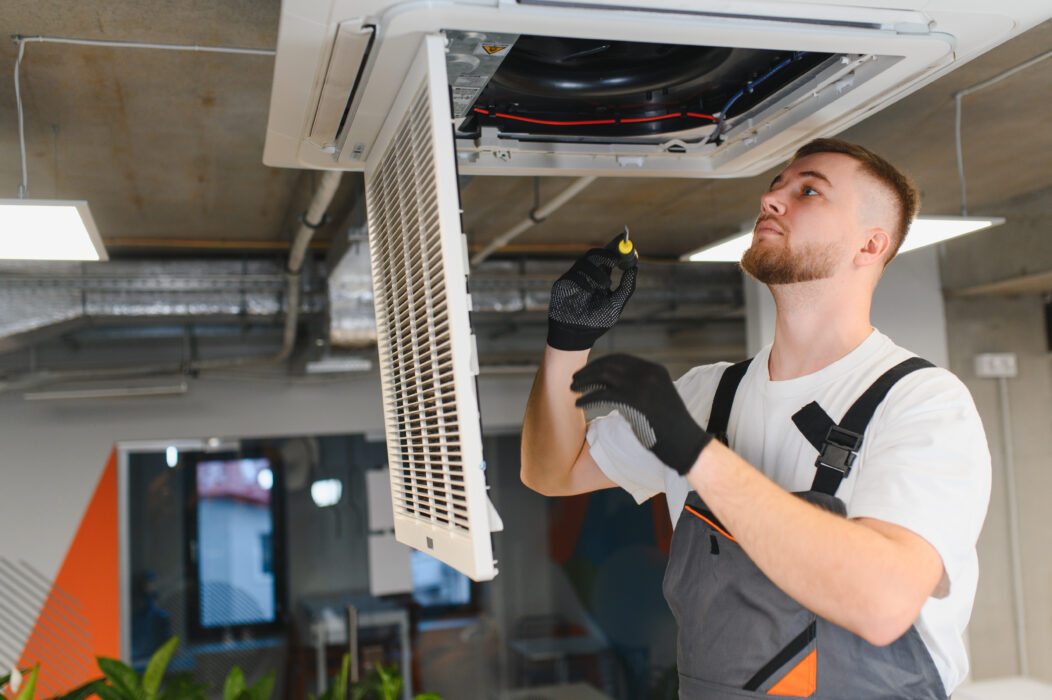
Commercial HVAC Maintenance in Summer: How AirConnect Helps Reduce Energy Costs and Prevent Downtime
-
- In Cost Savings Featured Seasonal Maintenance
As summer temperatures rise, commercial facilities face a familiar challenge: keeping buildings cool, efficient, and comfortable without driving energy costs through the roof. Waiting until the first major heatwave to test your HVAC system can lead to equipment failures, tenant complaints, costly emergency repairs, and unnecessary strain on aging infrastructure. The key to avoiding mid-summer breakdowns is proactive preparation. In this guide, we’ll cover: Essential commercial HVAC maintenance steps before summer Common cooling issues and troubleshooting tips Retrofit strategies for older systems How AirConnect helps reduce energy costs through smart HVAC monitoring and automation By taking a strategic approach now, facility managers and building owners can improve system reliability, extend equipment lifespan, and significantly reduce operating expenses during peak cooling season. The Ultimate Commercial HVAC Summer Maintenance Checklist A successful summer HVAC strategy starts with preventive maintenance. Commercial systems require far more than a simple filter replacement—every major component should be inspected, cleaned, and optimized before temperatures climb. Clean Condenser Coils Outdoor condenser units collect dirt, pollen, leaves, and debris throughout the year. Dirty coils reduce heat transfer efficiency, forcing compressors to work harder and consume more energy. Professional coil cleaning restores cooling performance and helps prevent excessive wear on compressors during high-demand summer conditions. Improve Airflow and Ventilation Poor airflow can make a building feel warmer even when HVAC equipment is operating correctly. Before summer: Replace dirty MERV or HEPA filters Inspect VAV boxes for proper operation Verify supply and return vents are unobstructed Check fan performance and airflow balance Optimizing airflow improves occupant comfort while reducing unnecessary system strain. Inspect Condensate Drains and Humidity Controls Commercial HVAC systems remove significant moisture from indoor air during summer months. Clogged condensate lines can lead to water damage, microbial growth, and reduced indoor air quality. Preventive maintenance should include: Clearing drain lines and P-traps Cleaning drain pans Treating pans with anti-microbial tablets Verifying humidity controls are functioning properly Check Refrigerant Levels Low refrigerant levels reduce cooling capacity and increase operating costs. Systems with leaks often run continuously while struggling to maintain temperature setpoints. Technicians should perform: Refrigerant pressure testing Leak detection inspections UV dye or electronic leak diagnostics Proper refrigerant charging Early leak detection helps prevent compressor damage and maintains system efficiency during peak summer demand. Common Commercial HVAC Problems During Summer Even well-maintained systems can experience issues during extreme heat. Identifying problems early can help prevent larger failures and expensive downtime. Why Is My HVAC System Blowing Warm Air? Warm air complaints are among the most common summer HVAC issues. Potential causes include: Frozen evaporator coils caused by restricted airflow Low refrigerant levels Tripped breakers or blown fuses Thermostat calibration problems Compressor or fan motor failures Training maintenance staff to recognize early warning signs—such as short cycling, unusual noises, or inconsistent cooling—can prevent small problems from escalating into major repairs. HVAC Retrofits vs. Full System Replacement As HVAC systems age, maintenance alone may no longer deliver optimal performance. For systems approaching 15–20 years old, facility managers should evaluate whether retrofitting existing equipment makes more financial sense than full replacement. High-Impact HVAC Retrofit Options Popular retrofit upgrades include: Variable Frequency Drives (VFDs) Advanced economizers Demand-controlled ventilation (DCV) Smart thermostats and building automation controls High-efficiency motors and fan systems These upgrades can dramatically reduce energy consumption while extending the usable life of existing infrastructure. In many cases, retrofit projects pay for themselves through utility savings and lower maintenance costs within just a few years. How AirConnect Improves HVAC Performance and Energy Efficiency Traditional HVAC maintenance schedules rely on periodic inspections—typically once in spring and once in fall. While helpful, this approach often misses developing issues between service visits. AirConnect changes that by delivering continuous, real-time HVAC monitoring and intelligent system optimization. Predictive HVAC Monitoring AirConnect uses IoT sensors and cloud-based analytics to monitor HVAC performance 24/7. Instead of reacting to breakdowns after they happen, facility teams receive predictive alerts when equipment performance begins to decline. This allows technicians to: Detect failing components early Prevent costly downtime Reduce emergency service calls Improve equipment reliability Extend asset lifespan Smart Energy Management AirConnect also helps facilities reduce peak energy demand during the hottest times of the day. Using occupancy trends, weather forecasting, and system analytics, AirConnect can: Pre-cool buildings during lower-cost energy periods Reduce unnecessary runtime Optimize fan speeds and airflow Lower demand charges from utility providers The result is improved occupant comfort with lower operating costs. Centralized Visibility Across Facilities For organizations managing multiple properties, AirConnect provides centralized visibility into HVAC performance across an entire portfolio. Facility managers can monitor: Energy consumption Equipment health Runtime efficiency Alarm conditions Maintenance needs This data-driven approach allows teams to make smarter operational decisions while reducing long-term maintenance expenses. Partnering Preventive Maintenance with Smart Technology Even the most advanced HVAC technology still requires skilled service and hands-on expertise. Combining preventive maintenance agreements with AirConnect’s predictive monitoring creates a proactive strategy that helps facilities stay ahead of costly failures. When maintenance teams arrive on-site with real-time system data and performance alerts already in hand, diagnostics become faster, repairs become more targeted, and downtime is minimized. Prepare Your Facility Before Summer Heat Arrives Summer HVAC failures are expensive, disruptive, and often preventable. By investing in preventive maintenance, strategic retrofits, and intelligent monitoring technology, commercial facilities can reduce energy costs, improve occupant comfort, and avoid unexpected downtime during peak cooling season. AirConnect helps facility managers move beyond reactive maintenance with real-time HVAC visibility, predictive analytics, and smart energy optimization designed specifically for commercial environments. Ready to Reduce HVAC Energy Costs and Improve System Reliability? Don’t wait until the next heatwave exposes hidden HVAC problems. Contact AirConnect today to schedule a commercial HVAC assessment and discover how predictive monitoring, smart controls, and energy optimization can help your facility: Reduce operating costs Prevent unexpected breakdowns Extend equipment lifespan Improve building comfort Gain real-time visibility into HVAC performance Start building a smarter, more efficient HVAC strategy before summer demand peaks. Call us at (877) 942-5613 Or email info@airconnectusa.com
Read More